
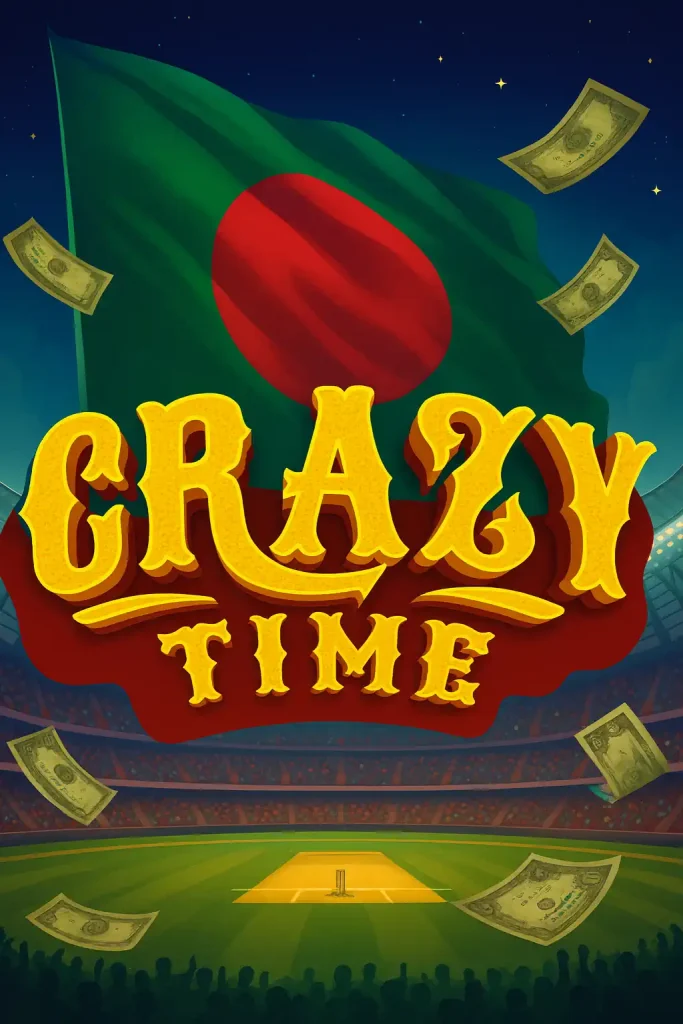
You can’t walk through Mirpur on a match day without hearing it. Radios tuned in, tea stalls crowded, voices rising with every ball. Cricket in Bangladesh isn’t just entertainment — it’s the national heartbeat. And yet, underneath that heartbeat, another rhythm has taken root: betting. Quietly, sometimes recklessly, often hidden in plain sight.
Ask around and you’ll hear a phrase that sums it up: crazy time. Not just the casino wheel that’s gone viral worldwide, but the way Bangladeshis describe those wild, unpredictable moments when cricket and money collide. A six in the last over. A run-out against the odds. Crazy time is what betting feels like — part carnival, part chaos, part curse.
The irresistible pull of cricket betting
Why do people bet? In Bangladesh, the answers aren’t abstract. They’re raw.
For some, it’s survival. A rickshaw puller in Chattogram told me he once doubled his day’s earnings by backing Bangladesh to hit more than 150 runs against Zimbabwe. He laughed as he remembered it, then admitted he lost triple the next week.
For others, it’s thrill. A student in Dhaka confessed he doesn’t even care who wins as long as his “over/under” bets keep him sweating till the last ball. “Cricket is already pressure,” he said. “Betting makes it unbearable — but in a good way.”
And then there’s pride. Patriotic bets, riding the emotional wave of the Tigers. When Bangladesh beat India in 2007’s World Cup, some locals said they made more money in one night than in months of labor. Ever since, every India-Bangladesh match has a double layer of tension: cricketing rivalry and money riding on it.
How Crazy Time became more than a game
Officially, Crazy Time is a glitzy online casino show — a spinning wheel, flashing lights, jokey presenters. But in Bangladesh, the phrase has slipped into cricket betting lingo. When Taskin takes two wickets in an over? Crazy time. When Shanto smashes back-to-back sixes, flipping the odds? Crazy time.
The crossover makes sense. Both rely on unpredictability. Both promise instant highs and crushing lows. And both feed that deep human itch for risk, for testing fate.
Betting markets in Bangladesh cricket
Cricket betting isn’t just about picking the winner. The real action is in the variety of bets. Here’s what typically hooks Bangladeshi fans:
| Bet Type | Example (Bangladesh Match) | Why People Like It |
|---|---|---|
| Match Winner | Bangladesh vs Sri Lanka — who wins? | Simple, patriotic, emotional |
| Top Batsman | Will Shanto score the most runs? | Feels like personal knowledge |
| Over/Under Totals | Will Bangladesh score over 160? | Keeps suspense alive |
| Ball-by-Ball Bets | Will the next ball be a six or dot? | Pure adrenaline |
| Prop/Exotic Bets | Taskin to take 3 wickets, or Tamim to last 15 overs | Insider-style prediction |
Notice the ball-by-ball and prop bets. Those are the real addictive hooks. You’re not waiting three hours for an outcome. You’re living and dying every delivery. It’s dopamine on tap — and that’s why people can’t stop.
The hidden economy of betting
Let’s be real: cricket betting in Bangladesh isn’t legal. But it’s everywhere. Apps. Bookies. Telegram groups. Friendly “pools” at offices. It’s an open secret.
Estimates are murky, but here’s a comparison snapshot:
| Country | Legal Status | Estimated Betting Volume (Annual) | Favorite Sports |
|---|---|---|---|
| Bangladesh | Illegal | Hundreds of millions (informal) | Cricket, Football |
| India | Mostly illegal | $60+ billion | Cricket, Kabaddi, Football |
| Pakistan | Illegal | Tens of billions | Cricket |
| Nepal | Small, semi-legal | Hundreds of millions | Cricket, Football |
Bangladesh sits in the shadows of the market, but passion makes up for regulation. Every big series brings new money into the cycle, and every loss pushes bettors deeper.
The technology twist
Remember when betting meant finding a shady bookie in Old Dhaka? That era’s fading. Now it’s mobile-first. Sleek apps, crypto wallets, even “gameified” platforms that dress up gambling as fun shows. Crazy Time itself is part of that digital carnival — it looks like a TV game, but behind the flashing graphics, it’s the same old risk-reward machine.
And here’s the danger: apps don’t close. They sit on your phone, nudging you after a loss: “try again.” Back in the old days, you had to wait for the next match. Now? You can chase your losses in minutes. That speed makes addiction quicker and harder to spot.
Stories from the ground
You want to understand cricket betting in Bangladesh? Don’t read reports. Talk to the people.
There’s the university student in Sylhet who claims he once paid his semester fees from a single night of IPL bets. He also admits he’s now in debt to three friends.
There’s the office clerk who runs a “mini-bookie” service inside his building. Colleagues slip him cash at lunch, and he updates odds on a shared WhatsApp group.
There’s the retired uncle who pretends to hate betting, yet secretly places wagers on whether Liton Das will survive the first over. He says it “keeps him young.”
This is the real face of cricket betting here: ordinary lives, woven with extraordinary risk.
The social sting of losing
Money is one thing. Shame is another. In Bangladesh, losing face in front of your community cuts deeper than losing cash. And betting debts have a way of becoming public.
A man loses, borrows to chase the loss, can’t pay back. Soon, the whole neighborhood knows. That’s when betting stops being a private thrill and turns into social humiliation. And yet — people keep going. Because the next match, the next over, the next crazy time might save them.
Why cricket magnifies the madness
Football has bettors. Casino games too. But cricket is different. Why? Because the sport itself is already a theater of suspense. Every delivery has weight. Every wicket feels like a storm.
That natural drama feeds betting perfectly. You don’t need to invent tension — it’s built into the game. And for Bangladesh fans, who live and breathe every run, betting feels like the ultimate way to prove loyalty, knowledge, or just nerve.
Regulation or denial?
This is the question Bangladesh faces. Keep pretending betting doesn’t exist? Or regulate it, tax it, and set guardrails?
Critics argue regulation will normalize gambling, creating a flood of addicts. Advocates say regulation is the only way to stop the bleeding — right now, money flows out of the country through unlicensed apps, and players who get hooked have no safety net.
The truth? Betting isn’t disappearing. It’s too ingrained, too easy, too global. The real decision is whether the country chooses control or chaos.
My take after years of watching
I’ve sat in tea shops where men cried over lost bets. I’ve also seen bettors leap and hug strangers after a last-ball six won them enough to cover a month’s rent. Betting is messy, contradictory, human.
If you ask me, cricket is already thrilling enough. Betting can make it unbearable — sometimes in a good way, sometimes in the worst way. The trick is knowing when to walk away. But in a culture where cricket is religion and Crazy Time has become slang for every mad swing of fate, that’s easier said than done.
Closing thought
Cricket in Bangladesh is passion. Betting is the shadow riding behind it. Together, they create moments of wild joy and bitter regret. That’s the Crazy Time we live in — a mix of cricket, cash, and chaos.
Whether the country embraces regulation or keeps fighting shadows, the truth is this: cricket betting isn’t a side show anymore. It’s part of the main act. And the next time Bangladesh takes the field, odds are being whispered somewhere.
The question isn’t whether betting will happen. It’s whether we’ll admit it.